
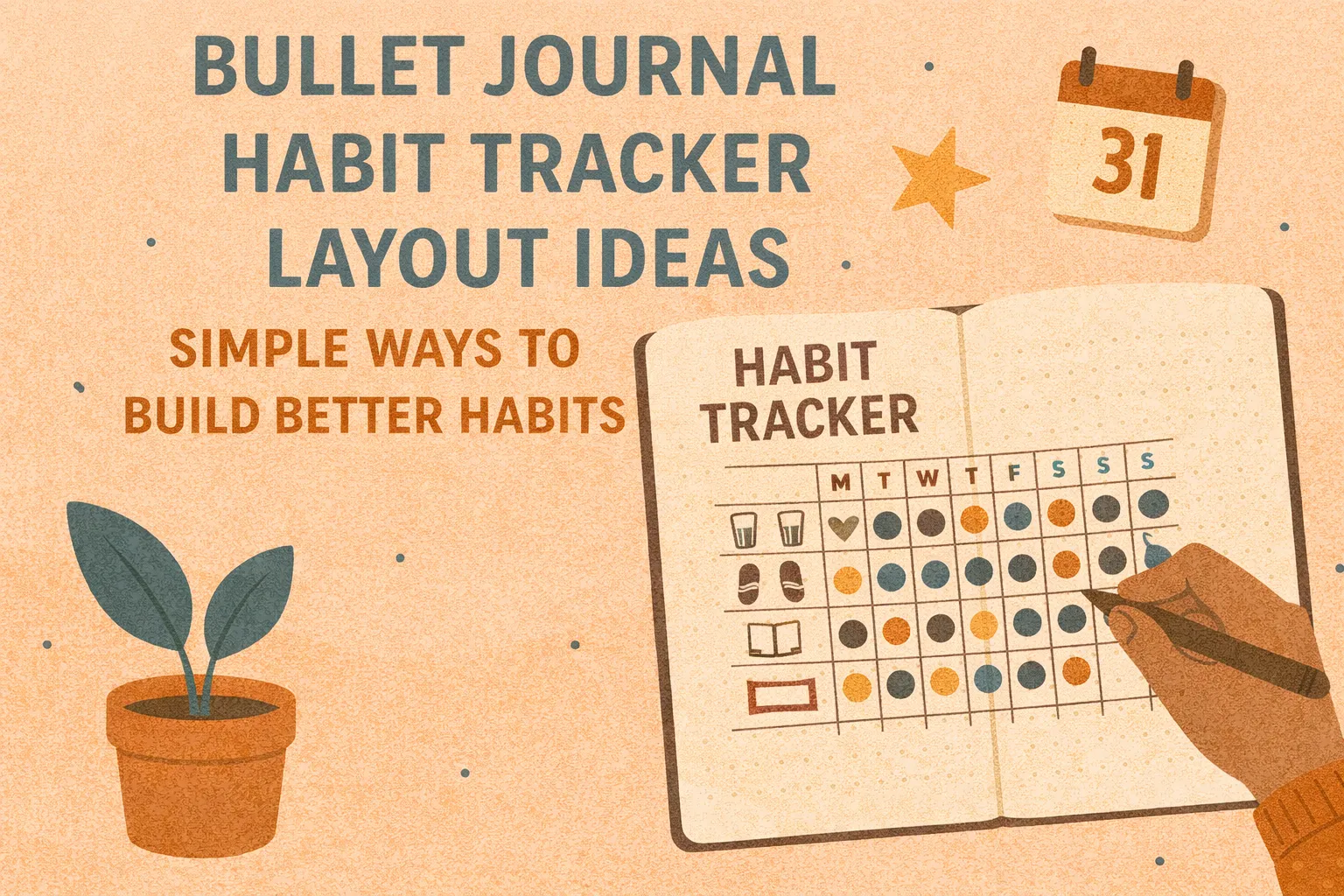
Building good habits sounds easy, but following them every day is the real challenge. We often start with excitement, but after a few days, we forget, lose motivation, or feel overwhelmed. This is where a habit tracker in a bullet journal becomes very helpful.
A habit tracker is not just a page where you tick boxes. It is a visual reminder of your effort. It helps you see your progress, understand your patterns, and gently push yourself to stay consistent—without pressure.
In this article, we will understand what a habit tracker is, why it works, and explore different bullet journal habit tracker layout ideas that are simple, practical, and easy to maintain.
Table of Contents
What Is a Habit Tracker in a Bullet Journal?
A habit tracker is a page where you track habits you want to follow regularly. These habits can be small or big, such as drinking water, studying daily, exercising, reading, journaling, or even sleeping on time.
Instead of relying on memory, you write the habit down and track it visually. Each time you complete the habit, you mark it. Over time, these marks show your consistency.
The best part is that habit trackers are flexible. There is no fixed rule. You design them according to your lifestyle, goals, and comfort.
Why Habit Trackers Actually Work
Habit trackers work because they make habits visible. When you see your progress on paper, you feel encouraged to continue. Missing a day also becomes visible, which helps you reflect without guilt.
They also help you understand yourself better. You may notice that you skip habits on busy days or feel more productive on certain days of the week. This awareness is very powerful.
Most importantly, habit trackers shift the focus from perfection to progress. Even if you miss a few days, you can always start again.
Before Choosing a Habit Tracker Layout
Before jumping into layout ideas, it is important to keep a few things in mind.
Start with a small number of habits. Tracking too many habits at once can feel stressful. It is better to track three to five habits properly than ten habits half-heartedly.
Choose habits that fit your current routine. If a habit feels unrealistic, the tracker will remain empty and demotivating.
Also, remember that your habit tracker does not need to look aesthetic. It needs to be useful. Simplicity always works better in the long run.
Monthly Habit Tracker Layout Idea
One of the most popular and beginner-friendly layouts is the monthly habit tracker. In this layout, habits are listed on one side, and days of the month are written across the top.
Each day, you mark whether you completed the habit or not. This layout gives a full view of your month on a single page. At the end of the month, you can clearly see which habits you followed consistently and which ones need more attention.
This layout is best for people who like structure and want a clear overview of their progress.
Vertical Habit Tracker Layout
In a vertical habit tracker, the days are written downwards instead of across. Habits are written at the top, and each row represents one day.
This layout works well if you have limited space or prefer a clean and narrow design. It also feels less overwhelming because you focus on one day at a time rather than the entire month.
Many people find this layout easier to update daily, especially during busy schedules.
Minimal Habit Tracker Layout
If you like simplicity, a minimal habit tracker is perfect. This layout uses plain lines, simple boxes, and one pen. There are no decorations, colors, or complex designs.
The focus is only on tracking habits, not on making the page look fancy. This is ideal for students, professionals, or anyone who wants a no-pressure system.
Minimal layouts are also easy to maintain, which increases the chances of consistency.
Circle or Dot Habit Tracker Layout
This layout uses circles or dots instead of boxes. Each circle represents one day, and you fill it when the habit is completed.
This design feels gentle and visually pleasing without being complicated. It works especially well for creative people who like soft visuals but still want clarity.
You can use one color or different colors to represent different habits.
Weekly Habit Tracker Layout
Some people prefer tracking habits weekly instead of monthly. A weekly habit tracker focuses only on seven days at a time.
This layout is helpful if your routine changes often or if monthly tracking feels too long and overwhelming. Weekly trackers also allow quick adjustments. If a habit is not working, you can change it the next week.
This layout is very effective for building new habits slowly.
Habit Tracker with Progress Bars
Instead of ticking daily boxes, this layout tracks progress using bars or lines. Each time you complete a habit, you color a part of the bar.
This layout works well for habits that are not daily, such as exercising three times a week or reading for ten hours a month.
It helps you focus on total effort rather than daily perfection.
Mood and Habit Tracker Combined Layout
This layout combines habit tracking with mood tracking. Along with marking habits, you also note how you felt that day.
Over time, you may notice patterns, such as feeling happier on days when you exercised or calmer on days when you journaled.
This layout is especially useful for mental health awareness and emotional balance.
Color-Coded Habit Tracker Layout
In this layout, each habit is assigned a color. You mark the habit using its color each day.
Color-coding makes the page visually interesting and helps you quickly identify which habits you are following more often.
However, it is important not to overuse colors. Too many colors can make the page confusing and tiring.
Habit Tracker for One Habit Only
Sometimes, focusing on one habit is more powerful than tracking many. This layout dedicates an entire page to a single habit.
For example, if you are trying to build a reading habit, the whole page can be designed to track reading days, hours, or pages read.
This layout works best when you want to deeply commit to one important habit.
Digital-Style Grid Habit Tracker
This layout looks like a clean grid, similar to an app interface. Each box represents a habit and a day.
It appeals to people who like order and symmetry. The grid style also makes tracking quick and easy.
This layout is very popular among people who enjoy clean and structured designs.
How to Stay Consistent with Habit Tracking
The most beautiful habit tracker is useless if it is not used regularly. Consistency does not come from motivation alone. It comes from making the process easy.
Keep your bullet journal easily accessible. Update your tracker at the same time every day, such as before sleeping. Avoid punishing yourself for missed days. Habit tracking is about awareness, not discipline.
Remember that empty boxes are not failures. They are feedback.
Common Mistakes to Avoid
One common mistake is tracking too many habits at once. This leads to burnout and guilt.
Another mistake is copying complicated layouts from the internet without considering personal comfort. What looks good online may not work in real life.
Also, avoid changing layouts too frequently. Give a layout at least one month before deciding if it works or not.
Final Thoughts
A bullet journal habit tracker is not about control. It is about understanding yourself better and creating gentle structure in your life.
The best habit tracker layout is the one you actually use. It does not need to be perfect, aesthetic, or impressive. It needs to be honest and helpful.
Start simple. Experiment slowly. And most importantly, be kind to yourself while building habits.
Small steps, repeated daily, always lead to big change.
