
Last updated on March 4th, 2026 at 07:28 pm
Starting a bullet journal can feel confusing at first. You may see many beautiful pages online and think you need perfect drawings, fancy pens, or artistic skills. The truth is very simple: a bullet journal is just a notebook that helps you organize your life. Nothing more, nothing less.
This guide is written especially for beginners. The language is simple, the ideas are practical, and everything can be done with basic stationery. By the end, you will clearly know how to start and what pages to include without feeling overwhelmed.
Table of Contents
What Is a Bullet Journal (In Simple Words)?
A bullet journal is a mix of a diary, planner, and to-do list. You use one notebook to:
- Plan your days
- Track habits
- Write thoughts
- Note goals
- Reflect on your life
There are no strict rules. You create pages based on what you need.
You do not need to be creative or artistic. Even plain handwriting works perfectly.
Things You Need to Start (Very Basic)
You can start with just two things:
- A notebook
- A pen
That’s it.
If you want, you can later add:
- A ruler (for straight lines)
- Highlighter or colored pens
- Pencil (for planning layouts)
Dotted notebooks are helpful, but lined or plain notebooks also work fine.


The First Pages Every Beginner Should Make
1. Index Page (Your Journal’s Map)
The index is the first page of your bullet journal. It helps you find things later.
You simply write:
- Topic name
- Page number
For example:
- Daily Log – Page 5
- Habit Tracker – Page 12
Each time you make a new page, add it to the index.
This keeps your journal neat and easy to use.
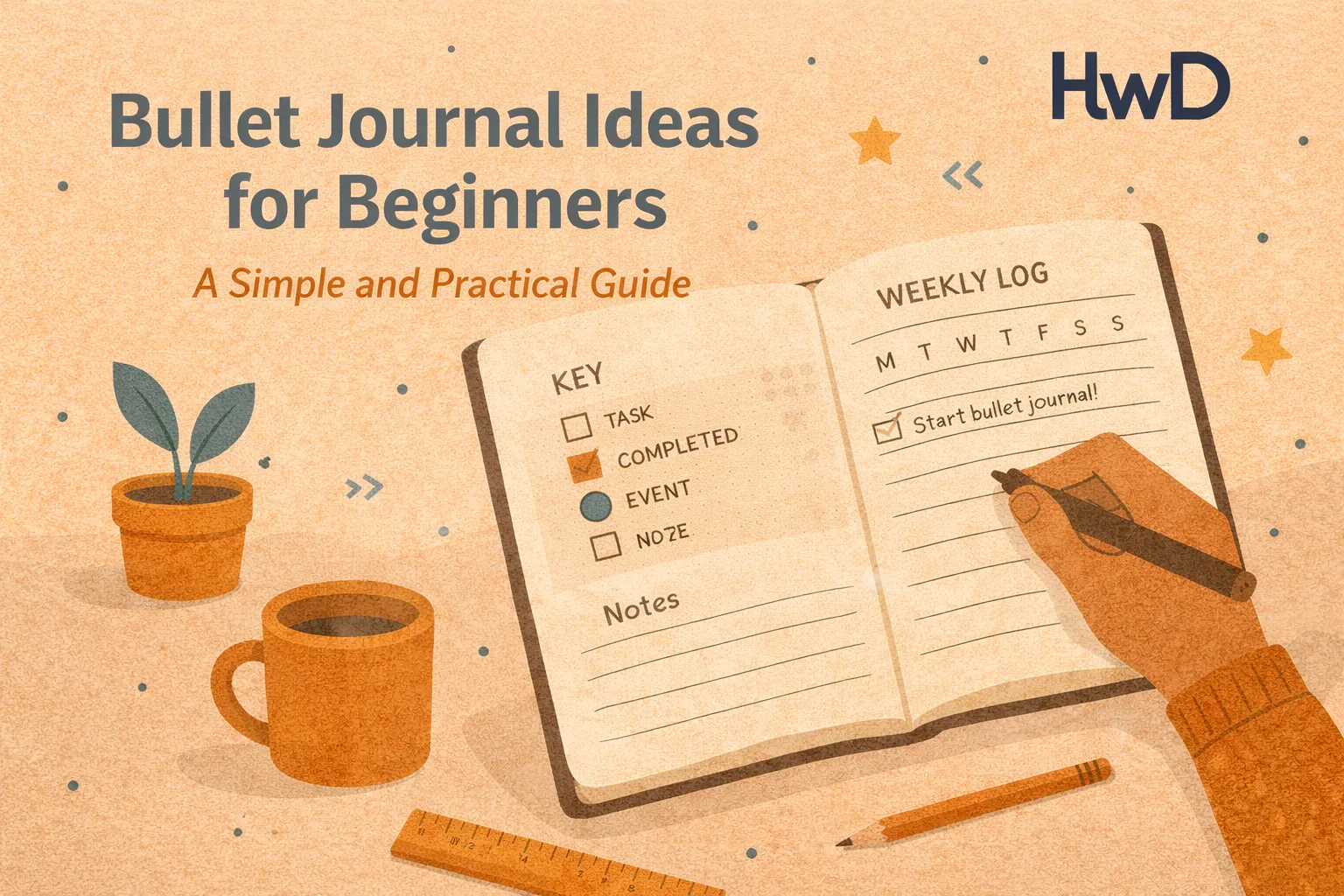
2. Key Page (Symbols You’ll Use)
The key page explains the symbols you use in your journal.
Common examples:
- ● Task
- ○ Event
- – Note
- ✔ Completed task
- ✖ Cancelled task
You can keep it very simple. Even one or two symbols are enough.
This system saves time and keeps your writing short.
3. Future Log (Big Picture Planning)
A future log helps you plan months ahead.
Divide 2–4 pages into sections for upcoming months. Write:
- Exams
- Trips
- Important goals
- Birthdays
Do not write too much. Just important points.
This page gives you a clear idea of what is coming in your life.
Monthly Pages for Beginners
4. Monthly Log (Your Month at a Glance)
This page shows what your month looks like.
You can write:
- Dates on the left side
- Important events next to them
Example:
- 10 – Exam
- 18 – Family function
This helps you see your month quickly without opening daily pages again and again.
5. Monthly Goals Page
This page answers one question:
“What do I want to focus on this month?”
You can write goals related to:
- Studies
- Health
- Personal habits
- Mental peace
Keep goals realistic. Small goals are better than big, scary ones.
For beginners, even 3–5 goals are enough.

Daily and Weekly Pages (The Heart of Bullet Journaling)
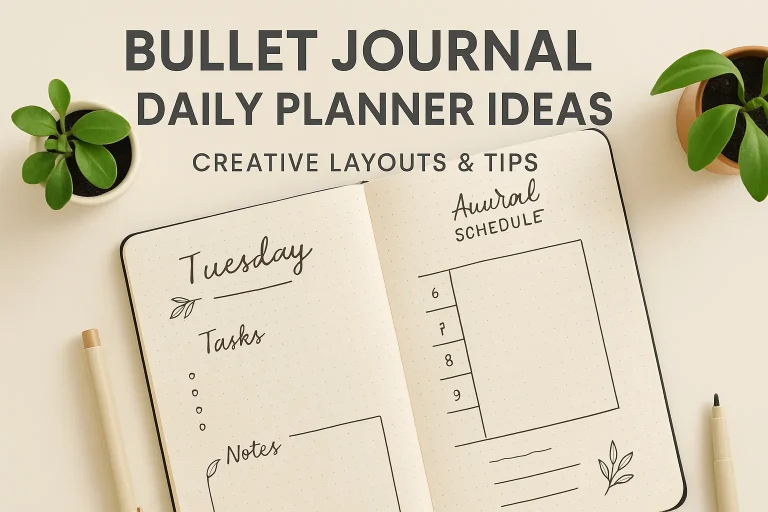
6. Daily Log (The Easiest Page)
Daily logs are simple running lists.
Each day, you write:
- Tasks you need to do
- Events
- Quick thoughts
There is no fixed space. If one day needs more space, use it. If another day is short, that’s fine.
This flexibility is what makes bullet journaling powerful.
7. Weekly Log (Optional but Helpful)
Some beginners like weekly pages to see their week clearly.
A simple weekly page may include:
- 7 boxes for 7 days
- A small notes section
Weekly logs are useful if:
- You have busy schedules
- You want better time control
If daily logs feel enough, you can skip weekly pages.
Easy Tracker Ideas for Beginners
8. Habit Tracker (Start Small)
Habit trackers help you build good habits.
For beginners, track only 2–4 habits, such as:
- Drinking water
- Reading
- Walking
- Sleeping on time
Draw a simple table with dates and habits. Tick or color the box when you complete a habit.
Do not try to track everything. Simplicity is the key.
9. Mood Tracker (Understand Yourself)
A mood tracker helps you notice emotional patterns.
You can:
- Color one box per day
- Use simple emojis
- Write one word for the day
This page is very useful for mental health and self-awareness.
There is no right or wrong mood. Everything you feel is valid.
10. Sleep Tracker (Very Beginner-Friendly)
Just write:
- Date
- Hours slept
Over time, you will notice how sleep affects your mood and energy.
You do not need fancy designs. A simple list works well.
Writing-Based Pages (No Drawing Needed)
11. Brain Dump Page (Clear Your Mind)
A brain dump is a page where you write everything in your mind:
- Worries
- Ideas
- Tasks
- Random thoughts
No structure. No rules. Just write.
This page is perfect when you feel stressed or confused.
12. Gratitude Page (Feel More Positive)
Once a day or once a week, write:
- One thing you are thankful for
It can be very small:
- Good food
- A smile
- A peaceful moment
This habit slowly changes your mindset.
13. Reflection Page (Learn From Your Month)
At the end of the month, answer simple questions:
- What went well?
- What was difficult?
- What can I improve next month?
This page helps you grow without judging yourself.

Common Beginner Mistakes (And How to Avoid Them)
Many beginners stop journaling because of these mistakes:
- Trying to make pages perfect
- Comparing with social media journals
- Adding too many trackers
- Feeling guilty for missing days
Remember:
Your bullet journal is a tool, not a test.
Missed a day? Just continue from the next page. No need to restart.
How to Stay Consistent as a Beginner
You do not need to journal every day.
To stay consistent:
- Keep your journal simple
- Write even one line
- Use it when you need it, not because you have to
Some days your journal will be full. Some days it will be empty. Both are okay.
Final Thoughts: Start Simple, Grow Slowly
Bullet journaling is not about making pretty pages. It is about understanding your life better.
As a beginner:
- Start with basic pages
- Use simple layouts
- Focus on usefulness, not beauty
With time, your journal will naturally change and improve.
The best bullet journal is the one you actually use.
So pick up a notebook, take a pen, and start—one page at a time.
