
Last updated on July 30th, 2025 at 10:37 pm

If you’re looking to lose weight, staying organized can be as important as hitting the gym or counting calories. A bullet journal—whether on paper, in a digital bullet journal, or by using bullet journal printables—can become your ultimate partner on your weight loss journey.
Below you’ll find practical advice for using a bullet journal to create sustainable habits, track progress, and stay motivated.
What Is a Bullet Journal?
A bullet journal (or BuJo) is a flexible, analog note-keeping system invented by Ryder Carroll. Instead of using rigid planners, bullet journals rely on rapid logging (bullets and notes), customizable collections (pages for any subject, like a tv show tracker bullet journal or a meal log), and undated logs: monthly, weekly, and daily. This adaptability allows you to design a minimalist bullet journal, a digital bullet journal in OneNote, or even a themed bullet journal for school or project management—whatever fits your needs best.
Why Use a Bullet Journal for Weight Loss?
- Personalization: Create pages that matter to you—track your workouts, plan healthy meals, add a mood tracker bullet journal, or set up a bullet journal for work-life balance.
- Mindful Engagement: Handwriting logs fosters awareness and intention.
- Motivation: Visual progress—habit trackers, weight loss graphs, or even a rewards tracker—keeps you inspired.
- Adaptability: Change layouts, incorporate new trackers, or even combine your bullet planner with a personal journal or Trello as you evolve.
Setting Up Your Weight Loss Bullet Journal
1. Choose Your Journal and Supplies
You can start a bullet journal on lined paper or use a digital bullet journal on Android or on your phone. Some people use bullet journal apps or create a digital bullet journal with Evernote. Supplies like colored pens, washi tape, stickers, banners, and headers can make the process more engaging and help you decorate the cover or first page of your project bullet journal.
2. Decide on Your Key Weight Loss Goals
Set clear objectives like:
- Lose a specific amount of weight.
- Develop healthy habits (e.g., drink 2L water daily, exercise 4x/week).
- Improve sleep or energy.
Record these on the first page as your bullet journal key—making your goals front and center.
3. Create Essential Bullet Journal Collections
a. Weight Tracker
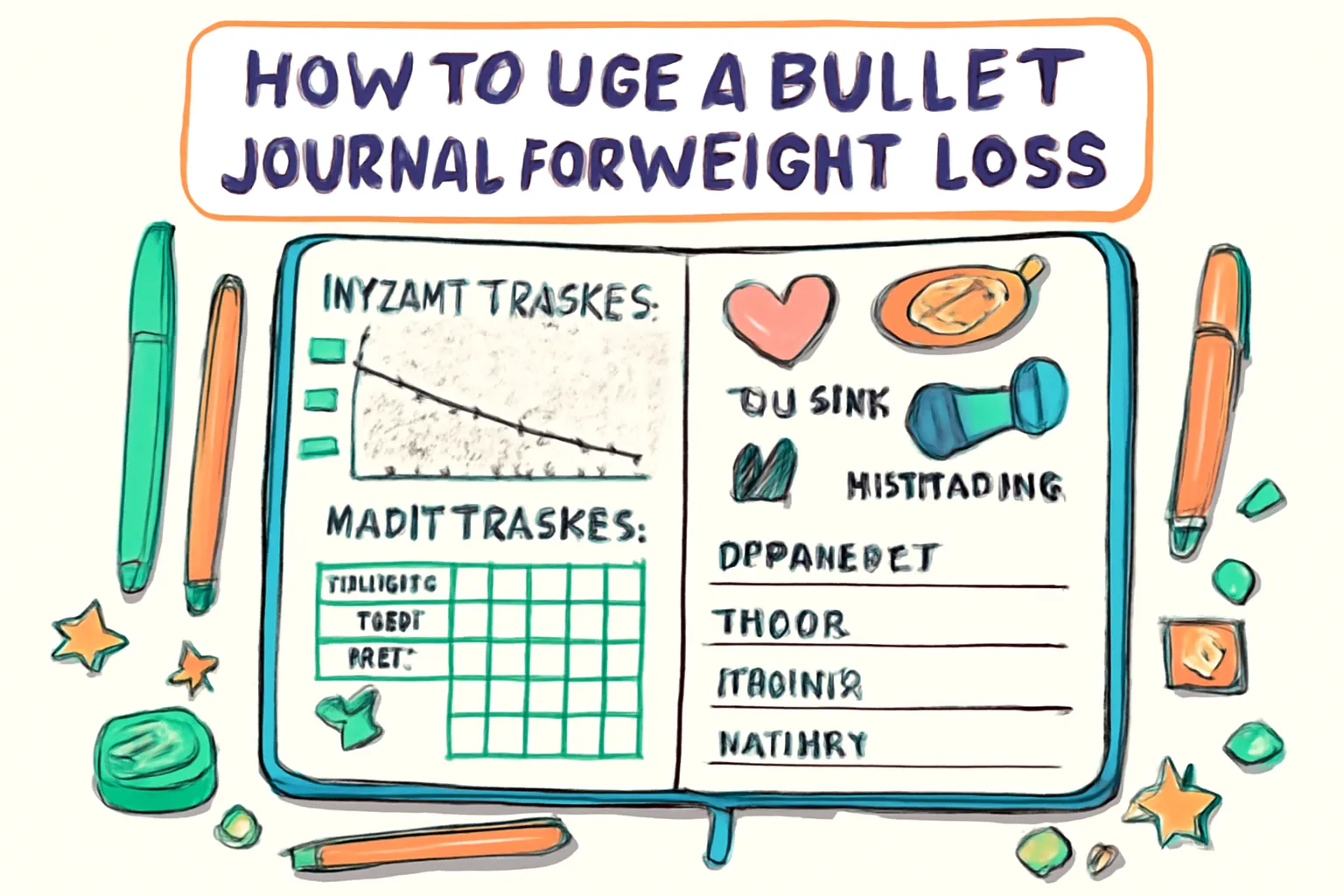
Make a monthly or weekly log to record your weight. You might draw a weight loss graph, use bullet journal headers for clarity, or decorate milestones with doodles and stickers.
| Date | Weight (kg) | Change |
|---|---|---|
| July 1 | 78.0 | — |
| July 8 | 77.5 | -0.5 |
| July 15 | 77.0 | -0.5 |
b. Habit and Goal Trackers
A habit tracker is at the heart of how to do a habit tracker in a bullet journal. Track habits like drinking water, taking steps, or limiting sugar. Table example:
| Habit | Mon | Tue | Wed | Thu | Fri | Sat | Sun |
|---|---|---|---|---|---|---|---|
| Drink water | X | X | X | X | X | ||
| 10K steps | X | X | X | ||||
| No sugar | X | X | X | X | X |
c. Meal and Food Logs
Record what you eat for each meal, including snacks. For more mindful eating, note your emotions (especially around emotional eating tendencies).
| Date | Breakfast | Lunch | Dinner | Snacks |
|---|---|---|---|---|
| July 1 | Oatmeal, eggs | Salad | Chicken | Apple |
| July 2 | Smoothie | Sandwich | Fish | Nuts |
d. Exercise Log
Log your workouts, including activity type (e.g., running, yoga), sets/reps, duration, intensity, and feelings. This highlights which workouts you enjoy and keeps you consistent.
e. Measurements & Non-Scale Victories (NSVs)
Track waist, hip, and arm circumference, clothing fit, and even before & after photos to document changes beyond the scale.
f. Weekly/Monthly Reflection Pages
Regularly reflect:
- What habits improved
- What was challenging
- What to change next (e.g., try a new workout class, pack snacks for work)
Making Your Bullet Journal Work for You
Customization Ideas
- Themed Spreads: Add inspiring quotes (learn how to write quotes in a bullet journal, or use bullet journal calligraphy).
- Mood Tracker Bullet Journal: Spot trends in mood vs. habits.
- Rewards: Track non-food rewards for reaching goals.
- Gratitude Log: Foster positivity by listing what you’re grateful for.
- Combine with Work, School, or Meeting Notes: If you want, add pages to bullet journal for work projects or to take meeting notes, or create a bullet journal for school.
Practical Tips for Bullet Journaling Success
- Keep It Simple: Start a simple bullet journal or minimalist layout to stay consistent.
- Routines: Build BuJo time into your week—even five minutes a day makes a difference.
- Honesty: Be truthful, even on tough days.
- Blend Tools: Use bullet journal printables, apps, a digital bullet journal on phone, or pair with fitness trackers and calorie apps for deeper insights.
- Motivation: To keep yourself motivated to follow your bullet journal, set achievable goals, use motivating bullet journal doodles, or maintain a vision board/spread.
Sample Bullet Journal Layouts
- Monthly Reflection Example:
Wins: Achieved 10K steps 20/30 days, lost 1.2kg.
Challenges: Ate out more than planned.
Next Steps: Try a new class. - Layout: Explore various ways to layout bullet journal spreads—experiment with neat handwriting, bullet journal banners, headers, and learn how to improve your handwriting in your bullet journal.
- Mood Trackers, Index, Calendar: Make a mood tracker, learn how to add pages, create a bullet journal index, draw a calendar, or decorate your journal cover for inspiration.
Common Mistakes and How to Avoid Them
- Overcomplicating your journal or trying to make every page perfect—just start simple.
- Neglecting self-reflection—insight is transformative, not just data.
- Being too rigid—flexibility ensures consistency. It’s okay to skip days or change your approach.
Also Read:
- How to write a bullet journal?
- How to use bullet journal effectively?
- How to write neat in a bullet journal
Final Thoughts
Using a bullet journal for weight loss can transform an intimidating process into a personal, mindful, and creative routine. Whether you use a classic notebook, a bullet journal app, printables, or even maintain your bullet journal in a planner, just start. Combine it with other tools, try digital layouts in Keynote or OneNote, or even make your own bullet journal on lined paper. Progress is greater than perfection—let your bullet journal be your partner on the path to lasting change.
